A technical career retrospective part 8
Community - A sidebar
Why this post?
I’ve spend a lot of time so far providing a lot of technical detail about specific systems. But there’s another aspect to this that doesn’t fit quite so cleanly into one of these categories, and that’s the growth of communications among the hobbyists.
(Right now I’m sitting at the DjangoCon US registration desk. It seems like the timing is perfect for this post. It’s impossible for me to over-state how valuable the various user-communities have been for me through the years.)
tl;dr
“None of us is as smart as all of us.” - Ken Blanchard
Background
Getting timely and accurate information about home computer was frequently difficult and sometimes frustrating. It was not uncommon to encounter a situation that could not be resolved by the information at hand.
So as much out of necessity as for any other reason, people would find others with the same equipment to share information and knowledge. But even geography could be an issue for products having a limited user base is more remote areas.
I was effectively a member of a “Users Group” when I started with the HP-2000F, even though we didn’t consider ourselves one. There would be conversations among the regulars hanging around the computer lab, either talking about projects or general tips and techniques.
The school district IT center also published a periodic newsletter with puzzles, projects ideas, and other useful information.
After that, I was isolated for a while. When I first got my Apple, my only source of continuing information were magazines and newsletters.
Magazines
At any point of time, I was probably subscribed to at least 6 different magazines, and would generally buy one or two others at newstands.

Those magazines were a life-line. Seeing what other people were doing opened my eyes to a range of possibilities I wouldn’t have otherwise known existed.
New products were an important part of it. Both the ads and reviews were helpful when trying to decide what to buy.
(I grew very wary of trusting the computer stores. They either didn’t know what they were selling, or were more interested in making the sale instead of providing useful information to their customers.)
The Internet Archive has a growing collection of classic magazines. I would particularly recommend browsing through an old issue of Computer Shopper (such as the July 1984 issue) to get a taste of what costs were like at the time.
- A dollar in 1984 is worth about $3.20 today, so multiply every price you see by 3.2 to get an idea of what the effective price was at the time. For example, multiple companies were advertising 1200 baud modems for around $470. That translates to $1500 today, for the ability to send and receive data at 120 characters / second. (120 CPS means that it would take about 2.5 hours to transmit 1 MB.)
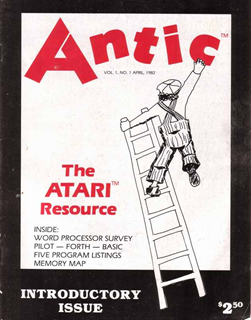
I had saved pretty much every issue of every magazine I bought over a 15 year period. There were probably 4 to 6 magazines where I had complete collections and an equal number that were mostly complete. When we were preparing to move in 1998, I realized I couldn’t keep them and so disposed of them all. (It was somewhere in the neighborhood of 20 - 25 paper boxes.) I hated having to do it, but I didn’t know whether I was going to have room to store them.
Limits
The magazines were great. But, there was no interactivity. If you had a question, there wasn’t really a way to get a timely answer.
I had known of services like Compuserve and The Source in 1981, but neither one had local access points. Connecting to them would have been long-distance calls in addition to the per-minute connection fees charged.
Private Bulletin Board Systems (BBS) were starting to become available as well, but there weren’t any really easy ways to find out about them.
Moving North
In the spring of 1983 I was reassigned to Washington DC. That summer I bought an Atari 800. (It was an amazing computer for developing and playing games. But since I never did any serious development on it, it doesn’t deserve a full write-up here.)
But the most significant change for me was the exposure to the local user group communities. Washington had very active groups for both the Apple and Atari systems. That also gave me sources for finding local BBSs.
User Groups
In the pre-internet days, the User Groups were the best sources for sharing information. Different groups would organize themselves in different ways, with different focuses.
The Washington area was filled with a number of different active groups.
Some were focused on areas such as business applications, gaming, software development or even hardware mods and add-ons. There were other groups that would be more general. Some larger groups would form special-interest subgroups. But you could almost always find some group sharing information on your particular area of interest.
Shareware
Prior to the growth of the Open Source movement, individuals could distribute their software as “Shareware”. A Shareware product was freely distributable, but frequently a limited version of a more full-featured product. By sending a payment to the author, you would usually receive something like a “Registration Code” that would unlock the rest of the program.
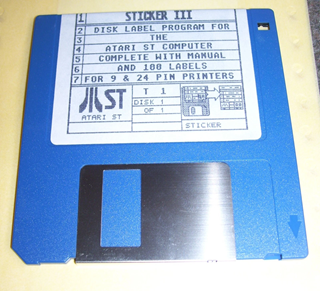
Many user groups would put together collections of shareware and free software on disks, and sell them to the group members as a means of raising money for the group. The unregistered versions would be distributed - the people buying the disks would still be expected to register the software they’re using.
These disks were pretty much the only way a lot people would have access to that software. Download sites were still fairly rare, and time consuming to download anything of reasonable size. A file as small as 50K would take about a half-hour at 300 baud.
The big draw for these programs was that they were usually much less expensive than their full-priced commercial counterparts, and could be tested before purchase to verify that they were going to be sufficient.
The shareware market was much larger in the MS-DOS world, but was also a significant part of the market of other systems.
Knowledge sharing
The ability to really talk to others about specific issues was much more valuable than just the exchange of software. There is no way that I could calculate the value I received from the numerous conversations with all the people I talked to through the years.
In some cases, that value was direct - someone knowing precisely what the problem was that I was facing, and knew exactly what to do about it. In others, the connection wasn’t quite so direct, but close enough that I could bridge the gap between what they knew and what I needed to know. And sometimes, the person I was speaking with didn’t have any idea - but knew one or more people that might.
In any event, that willingness of people to share their knowledge with me openly and freely is something that has shaped my attitude since then. In some small way I like to think that I have carried that ideal forward.
Telecommunications
But even the user groups had their limits. Meetings might only be once a month, or not draw people with the expertise you were looking for.

Staying in touch electronically was the ideal solution for that.
Modems had been around and generally available since before I got started. The limitation had been what you would connect to. Even though the internet existed in 1983, it wasn’t something that the general public could access.
Going on-line at the time then meant one of two things. You were either connecting to a Bulletin Board System, or you were dialing in to a commercial service.
Bulletin Board System (BBS)
A BBS was a computer than the System Operator (SysOp) set up to run one of the BBS software packages for that system. A BBS would typically have a number of different “message boards”, allowing for conversations in a topic.
A BBS may also support a “Files” area, space used to store files that members could download. In a floppy-disk-only system, this space was generally very limited and reserved for specific needs. As larger hard drives became common, that space allocated for files would tend to grow.
Most home BBS at the time also only ran at 300-baud - 30 characters per second. It was fast enough to read messages and more than fast enough for writing messages, but not a whole lot else.
Over time as computers became more powerful, larger hard drives became more common, and home modem speeds kept increasing, features such as large file download libraries became more popular. Many BBSs would also provide turn-based games that could be played against other people.
Evenually, some of the larger systems would grow to where they would have multiple modems, allowing more than one person to connect at a time.
There were also many BBSs that weren’t focused on computers or (necessarily) technology. I belonged to different BBSs focused on Science Fiction, General Science, and Board Games.
Some of the more popular BBS software would also have custom clients available for them. These would be programs that would log on, download the new messages, then log off. It would then provide a custom interface making it easy to read and reply to messages off-line, and then reconnect to send those replies.
Another feature that grew along with them were the “BBS Relay” systems. Certain BBS programs were able to send their recent messages to other BBS running the same software. These systems ended up being linked together as a large mesh messaging framework. You could share knowledge and insights with people around the world.
Sidebar - One BBS
The first BBS SysOp that I met was someone running the software on his Apple. He had 1 floppy disk drive dedicated to the BBS, and an old 110 baud acoustic coupler as a modem.
When the phone rang he would pick up the phone. If he heard the carrier tone, he would start the software (if necessary), then put the phone in the modem cradle. The screen showed when the caller disconnected, so he’d then place the phone back on it’s base.
This meant that the BBS was only available when he was home and sitting near that computer. Typically, this meant that you could only expect to connect to it from 7 - 9 PM in the evenings. Not only that, but with only 1 diskette dedicated to it, the number of messages and files that it kept was relatively small.
Commercial Services
In 1983, there were two choices - CompuServe and The Source. I had multiple people recommend CompuServe to me, so that’s the one I joined.
The services provided weren’t fundamentally different than those provided by the larger BBSs.
The service was divided into different areas called “forums” or “Special Interest Groups” (SIG). For example, there were a couple of Atari groups, including a general “Atari” forum and an “Atari Developers” forum. There was a gaming forum for all types of computer-based and board games. There were multiple Apple and Commodore groups.
Each forum was divided into a maximum of 17 sections. Each section had its own message board, file storage area, and chat room. (The chat rooms were originally known as “CB channels” in a reference to the “Citizen’s Band” radios that were relatively common in the ’70s and ’80s.)
There was also an email facility for private communication between members.
My user ID for CompuServe was 72437,351. When CompuServe started exchanging email on the internet, my email address became 72437.351@compuserve.com, becoming my first internet email address.
The effects
These forums became significant channels for information. In some cases, it was truly overwhelming. My perception was that the rate and volume of available information grew from needing to dig out answers in 1981 to being flooded by resources in 1986.
Somewhere in that timeframe it became impractical to know everything about your chosen platform - much less being able to be an expert in multiple platforms. It changed from “It’s difficult to get an answer to a question” to “It’s difficult to find the answer to a question among all the other information”.
From 1985 to 1991 I spent a tremendous amount of time on-line. There was such an amazing world out there - I just couldn’t get enough.
I’ve always been in the second rank - following where others have led. But during this time, following everything became impossible. I had to pick and choose because I couldn’t keep up with any reasonable fraction of the developments taking place on what seemed to be a daily basis.
That flood of information also opened my eyes to worlds of possibilities. There is no way to judge just how much this has been of benefit to me throughout the years and I’m grateful for those pioneers who so willingly shared their knowledge, ideas, and opinions.
My gratitude goes much deeper than that in other areas. In many places, some of those conversations grew from professional or hobbyist topics to become quite personal. The on-line friendships and relationships that developed during that time were much more important to me as a person. They had become my anchor of stability in what was otherwise a tumultuous time in my life.
With the growth of the web causing the demise of the on-line services and BBSs, and other “real-world” events taking place, I’ve long since lost track of those most important to me at that time. There are five or six people truly responsible for turning me into the person I am today. Those are the people that I would really like to thank. (A couple may not even realize just how important they were to me. Sometimes even the smallest gestures have tremendous effects.)